---
title: Highlights from The Menopause Society’s 2026 Annual Meeting
description: Key takeaways from The Menopause Society 2026 including Flo's latest research presented, perimenopause and resistance training, CVD risk and male partners
image: https://med.flo.health/hubfs/The%20Menopause%20Society%E2%80%99s%202026%20Annual%20Meeting_V.1.png
---
[ Flo is now **FSA/HSA** eligible](https://help.flo.health/hc/en-us/sections/31924129676564-Reimbursing-Flo-Premium-with-your-FSA-HSA-funds)
[Learn more](https://med.flo.health/blog/highlights-from-the-menopause-societys-2026-annual-meeting#get-in-touch)
- [About Flo](https://med.flo.health/about-flo)
- [Perimenopause Support](https://med.flo.health/perimenopause-support)
- [Free Practice Resources](https://med.flo.health/co-care-pack)
- [Knowledge Hub](https://med.flo.health/)
- [Articles](https://med.flo.health/articles)
- [Medical Education](https://med.flo.health/cpd-obgyn)
- [Whitepapers](https://med.flo.health/whitepapers)
- [Blog](https://med.flo.health/blog)
- [Clinical Evidence](https://med.flo.health/)
- [Medical Accuracy](https://med.flo.health/medical-accuracy)
- [Science & Research](https://med.flo.health/science-and-research)
- [Data Privacy](https://med.flo.health/data-privacy)
[About Flo](https://med.flo.health/about-flo) [Perimenopause Support](https://med.flo.health/perimenopause-support) [Free Practice Resources](https://med.flo.health/co-care-pack)
[Knowledge Hub](https://med.flo.health/)
- [Articles](https://med.flo.health/articles)
- [Medical Education](https://med.flo.health/cpd-obgyn)
- [Whitepapers](https://med.flo.health/whitepapers)
- [Blog](https://med.flo.health/blog)
[Clinical Evidence](https://med.flo.health/)
- [Medical Accuracy](https://med.flo.health/medical-accuracy)
- [Science & Research](https://med.flo.health/science-and-research)
[Data Privacy](https://med.flo.health/data-privacy)
[Learn more](https://med.flo.health/blog/highlights-from-the-menopause-societys-2026-annual-meeting#get-in-touch)
# Highlights from The Menopause Society’s 2026 Annual Meeting
Published: 25 Nov 2026
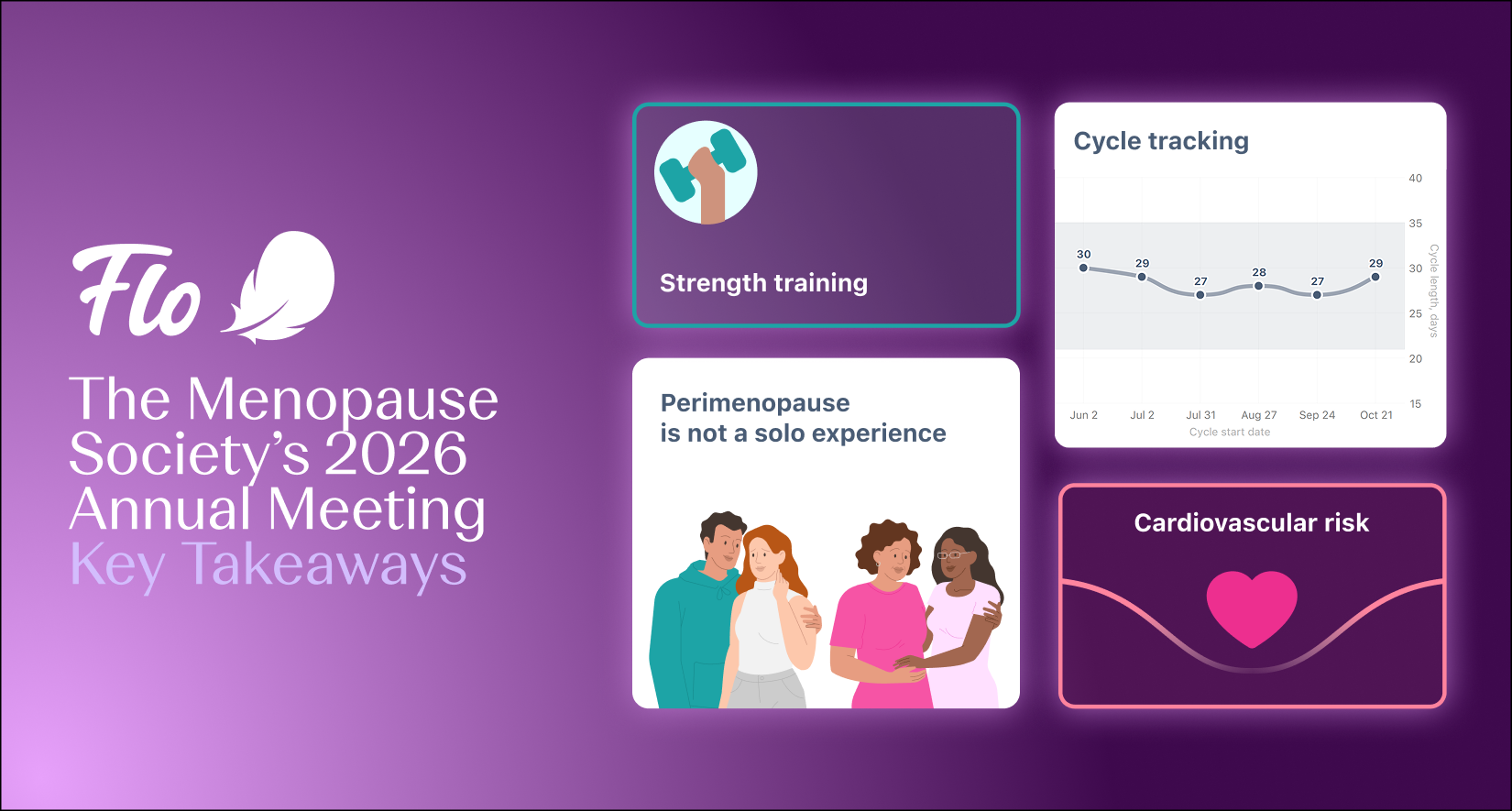
Members of Flo’s science and medical partnerships teams attended The Menopause Society’s 2026 Annual Meeting in San Diego, California, October 20–24. The conference brought together more than 2,000 leading clinicians, researchers, and industry leaders to discuss and learn about the latest science, new approaches to menopause care, and the partners and tools that can strengthen patient support. The theme for this year’s conference was Bridging the Gap Between Research and Practice, as introduced by keynote speaker Dr. Jill Biden, former First Lady of the United States and chair of the Women’s Health Network at the Milken Institute.
We were proud to take part in an event where physicians came together to advance their understanding and treatment of menopause and perimenopause. Our presence gave us a chance to shine a spotlight on Flo’s launch into the perimenopause landscape. We shared some of our latest perimenopause findings from our growing portfolio of scientific research, discussed how healthcare professionals can potentially use Flo’s features to support perimenopause care, and attended several talks to stay current on the latest research.
We gained insight into diverse topics such as heart health in midlife, the importance of exercise during perimenopause, menopause, and postmenopause, and male partners’ experiences and support needs during menopause. Below are some key findings and highlights that stood out.
### Flo research: Advancing our understanding of perimenopause
Flo’s lead research scientist and health economist, Yihan Xu, PhD, presented research to advance understanding of early perimenopause, an under-recognized life stage that can bring complex, fluctuating symptoms and considerable uncertainty.
Around [one-third of women](https://journals.lww.com/menopausejournal/fulltext/10.1097/gme.0000000000002837~exploring-prevalence-and-drivers-of-perimenopause) in the United States ages 35 and up aren’t sure if they’re in perimenopause. Clinicians and researchers rely on the Stages of Reproductive Aging Workshop +10 (STRAW+10) criteria as the gold standard framework for classifying reproductive aging. STRAW+10 uses menstrual cycle patterns as the principal basis for defining the stages of reproductive aging, from the early reproductive years through postmenopause, relying primarily on persistent changes in cycle variability.
However, 15% to 25% of women experience limited changes in cycle regularity during perimenopause, so they may bypass conventional recognition criteria. Xu’s research looked at whether a clinically meaningful symptom burden emerges before patients meet the STRAW+10 criteria for early perimenopause.
Her findings suggest that symptoms may precede early perimenopause and that age alone may be a less reliable predictor of perimenopause than previously thought.
Patients in the late reproductive stage can differ considerably. Some experience subtle cycle changes that fall short of the STRAW+10 criteria yet still report significant symptoms. When a patient’s symptom burden is high, clinical evaluation may be warranted even if cycle changes don’t meet the formal criteria.
Xu suggested that longitudinal cycle tracking can give clinicians a clearer picture of a patient’s cycle history, which may support earlier recognition of perimenopause and more timely support.
### Lifestyle medicine in perimenopause, menopause, and postmenopause: The importance of exercise
Dr. Amy Comander, medical director and director of lifestyle medicine at the Mass General Brigham Cancer Institute, shared an important, evidence-based presentation on exercise in perimenopause, menopause, and postmenopause. Resistance training is among the most effective strategies for combatting age-related muscle loss, and it’s never too late to start, she said. In fact, patients can always build strength relative to their personal baseline. She drove home the point that strength can be built at any life stage, whether before, during, or after menopause.
For patients navigating menopause, resistance training offers meaningful benefits for muscle, bone, and cardiometabolic health. Because these systems undergo significant change during the menopausal transition, this is a particularly important time to prioritize strength training. Dr. Comander shared some statistics that drive home why that is. Women experience an approximate 10% drop in bone mineral density during the five-to-10-year menopausal transition, as well as an approximate 1% to 1.5% yearly drop in muscle mass after menopause. Meanwhile, sarcopenia prevalence spikes significantly from 3% in early perimenopause to 30% in late perimenopause and 32% in late postmenopause.
To put resistance training into practice, body weight exercises, resistance bands, weight machines, and free weights are all good options. Two weekly sessions as brief as 15 to 20 minutes that target all major muscle groups can be effective, Dr. Comander mentioned.
Beyond resistance training, aerobic exercise also offers meaningful improvements in cardiometabolic health, Dr. Comander said. Women should aim for 150 to 300 minutes of moderate-intensity aerobic exercise per week or 75 to 150 minutes of vigorous intensity exercise. Bone-specific exercises such as weight-bearing activity and progressive resistance training, balance training, and avoiding sedentary behavior are also key components of an effective exercise prescription at this pivotal time in life, Dr. Comander noted in her talk.
As with many other aspects of menopausal care, clinicians can tailor exercise recommendations to support individual needs, she noted. A well-designed prescribed exercise program can help patients build strength, support bone health, improve fitness, and enhance overall well-being, all of which help patients maintain independent function with age.
### Menopause is not a solo experience: The role of male partners
Dr. Amobi Onumaeme, founder and director at MyMenopauseGP, presented a talk on male partners’ experiences, knowledge, and support needs during perimenopause. His talk was based on a small cross-national survey of men in Canada and the United Kingdom who are partners of perimenopausal and postmenopausal women.
Menopause doesn’t affect women alone. It deeply impacts partners and daily life together, Dr. Onumaeme emphasized. While many women feel misunderstood during menopause, men often aren’t clear on how to help. And many men he surveyed feel they need support, too.
Dr. Onumaeme shared a number of statistics to illustrate the impact of menopause on relationships. Among men surveyed in Canada, 72% knew little to nothing about menopause beforehand, and the same percentage noticed changes in intimacy and connection with their partner during menopause. Meanwhile, 38% reported that their relationship grew weaker during menopause. Men said they faced a number of challenges, including knowing their partner was going through a lot and not being able to help, as well as feeling physically rejected.
A staggering 90% of the Canadian men surveyed said a support program for men would or might help, and 57% reported that they either would or might join a men’s circle. They reported interest in better understanding mood changes, sexual changes, hormones and menopause treatment, and communication during menopause. The men surveyed were most interested in learning about these topics through video courses and podcasts, though men’s groups and one-on-one coaching were also mentioned.
Dr. Onumaeme highlighted three main implications for clinicians, based on his research findings. The first is the importance of welcoming partners to visits and sharing information with them, with their female partner’s consent. The next is education. Clinicians can share plain language guidance on menopause symptoms, hormone replacement therapy (HRT), and communication, as well as inquire about intimacy. Dr. Onumaeme closed on the topic of evaluation. Education materials for men should be tested to confirm they’re accessible, meet men’s own needs, and can be accessed anonymously. Without this, their clinical benefit can’t be evaluated.
### Reproductive factors as modifiers of cardiovascular risk
Dr. Emily S. Lau, female cardiovascular health specialist and investigator at Massachusetts General Hospital, presented on primary prevention in midlife patients, framing midlife as an intervention window and menopause as an inflection point for heart health.
Dr. Lau emphasized that cardiovascular risk should be factored into decisions about HRT for midlife patients. She was clear that HRT should not be used for primary or secondary cardiovascular disease prevention. Regardless of whether HRT is prescribed, a menopause consultation is an excellent opportunity to assess and treat traditional cardiovascular risk factors, she said.
Reproductive events such as pregnancy and menopause alter cardiovascular risk and should be documented and factored into risk assessment, Dr. Lau emphasized. Low short-term risk does not mean prevention can wait, since long-term risk can still be high. Many risk calculators may miss female-specific risk factors, such as a history of gestational diabetes and other reproductive risk markers, and family history of cardiac, inflammatory, or metabolic conditions, Dr. Lau said.
Dr. Lau noted that coronary artery calcium levels can be used as a “tie breaker” when a treatment decision is uncertain (such as whether to prescribe statins in someone with borderline or intermediate risk) but is of little value when a patient is clearly high risk or very low risk. She also said that hypertension prevention should start before severe hypertension.
### Flo poster presentations
Flo scientists shared perimenopause data and research with researchers and clinicians at two poster presentations:
- Menstrual cycle regularity definitions may be temporally incomplete (Adam C. Cunningham, PhD; Yihan Xu, PhD; Liudmila Zhaunova, PhD)
This research describes how the time window used to measure cycle irregularity matters. A patient’s cycles may be classified as regular or irregular depending on the length of time over which their cycles are observed. Standardizing this window may make it easier to distinguish transient or one-off irregularity from clinically meaningful change.
- Physical activity frequency and perimenopause symptom burden: Global insights from the Flo app (Cunningham, A. C., Castillo Silva, J., Hewings-Martin, Y., et al.)
Based on a cross-sectional study, women reporting more frequent physical activity had a lower perimenopause symptom burden across psychological, somatic, and urogenital domains. The strongest association was seen with psychological symptoms. Future prospective studies are needed to determine whether increasing physical activity improves symptoms.
### Key takeaways from the meeting
It was an honor for Flo to not only attend but also contribute to such a pivotal event in the menopause landscape. The Menopause Society’s 2026 Annual Meeting reflected the field’s significant evolution in recent years, while also highlighting the need for continued progress in female health research and clinical care.
Key takeaways include:
- **Considering perimenopause symptoms:** Some patients experience subtle cycle changes that fall short of the STRAW+10 criteria yet still report significant symptoms. When symptom burden is high, clinical evaluation may be warranted for younger patients.
- **The importance of exercise at any life stage:** Strength can be built before, during, and after menopause. Clinicians can tailor exercise recommendations to help patients build strength, support bone health, improve fitness, and enhance well-being.
- **Supporting male partners:** Better support and education are needed for male partners, who often lack understanding of menopause, aren’t clear on how to help their partners, and feel they could use support as well.
- **Midlife is an intervention window for cardiovascular health:** Menopause is an inflection point for heart health, and reproductive factors should be considered when evaluating cardiovascular risk.
- **Cardiovascular risk and hormone replacement therapy:** Cardiovascular risk should be factored into decisions about hormone replacement therapy. Whether or not HRT is prescribed, a menopause consultation is a good chance to assess and treat traditional cardiovascular risk factors.

##### Stay up to date
You’re busy, we get it. Sign up to get the latest research and evidence in women’s health, plus practical tools and resources to help you save time and support your patients.
This form is hidden based on your cookie choices.
Change cookie choices
###### Product
- [Tracking cycle](https://flo.health/product-tour/tracking-cycle)
- [Getting pregnant](https://flo.health/product-tour/getting-pregnant)
- [Pregnancy](https://flo.health/product-tour/pregnancy)
- [Help Centre](https://help.flo.health/hc/en-us)
- [Privacy Portal](https://flo.health/privacy-portal)
###### Company
- [About us](https://flo.health/about-flo)
- [Medical affairs](https://flo.health/medical-expertise)
- [Science & Research](https://flo.health/science-and-research)
- [Careers](https://flo.health/careers)
- [Contact](https://flo.health/contact-us)
- [Press Center](https://flo.health/press-center)
###### Privacy
- [Privacy policy](https://flo.health/privacy-policy)
- [Terms of use](https://flo.health/terms-of-service)
- [Cookie policy](https://flo.health/cookie-policy)
- [Trademark Usage](https://flo.health/trademark-usage-guidelines)
- Your Privacy Choices
###### SOCIAL MEDIA
- [Instagram](https://www.instagram.com/flotracker/)
- [Facebook](https://www.facebook.com/flotracker/)
- [TikTok](https://www.tiktok.com/@flotracker?lang=en)
- [Linkedin](https://www.linkedin.com/company/flo-by-flohealth-inc/)
###### Flo App
The #1 period and ovulation tracker worldwide
© 2026 Flo Health Inc., Flo Health UK Limited
```json
{
"@context" : "https://schema.org",
"@type" : "BlogPosting",
"author" : {
"@type" : "Person",
"name" : "Flo Health",
"url" : "https://med.flo.health/blog/author/flo-health"
},
"dateModified" : "2026-11-25T15:16:34.654Z",
"datePublished" : "2026-11-25T15:16:34.000Z",
"headline" : "Highlights from The Menopause Society’s 2026 Annual Meeting",
"image" : [ "https://med.flo.health/hubfs/The%20Menopause%20Society%E2%80%99s%202026%20Annual%20Meeting_V.1.png" ],
"mainEntityOfPage" : {
"@id" : "https://med.flo.health/blog/highlights-from-the-menopause-societys-2026-annual-meeting",
"@type" : "WebPage"
},
"publisher" : {
"@type" : "Organization",
"logo" : {
"@type" : "ImageObject",
"url" : "https://med.flo.health/hubfs/Flo-Logo.png"
}
}
}
```