---
title: New Flo study reveals the global reality of perimenopause
description: Flo and Mayo Clinic study of 17,494 women reveals that hot flashes are not the most common perimenopause symptom and which country comes top for knowledge.
image: https://med.flo.health/hubfs/perimenopause%20paper%20hero%20image-1.png
---
[ Flo is now **FSA/HSA** eligible](https://help.flo.health/hc/en-us/sections/31924129676564-Reimbursing-Flo-Premium-with-your-FSA-HSA-funds)
[Learn more](https://med.flo.health/articles/new-flo-study-reveals-the-global-reality-of-perimenopause-1#get-in-touch)
- [About Flo](https://med.flo.health/about-flo)
- [Perimenopause Support](https://med.flo.health/perimenopause-support)
- [Free Practice Resources](https://med.flo.health/co-care-pack)
- [Knowledge Hub](https://med.flo.health/)
- [Articles](https://med.flo.health/articles)
- [Medical Education](https://med.flo.health/cpd-obgyn)
- [Whitepapers](https://med.flo.health/whitepapers)
- [Blog](https://med.flo.health/blog)
- [Clinical Evidence](https://med.flo.health/)
- [Medical Accuracy](https://med.flo.health/medical-accuracy)
- [Science & Research](https://med.flo.health/science-and-research)
- [Data Privacy](https://med.flo.health/data-privacy)
[About Flo](https://med.flo.health/about-flo) [Perimenopause Support](https://med.flo.health/perimenopause-support) [Free Practice Resources](https://med.flo.health/co-care-pack)
[Knowledge Hub](https://med.flo.health/)
- [Articles](https://med.flo.health/articles)
- [Medical Education](https://med.flo.health/cpd-obgyn)
- [Whitepapers](https://med.flo.health/whitepapers)
- [Blog](https://med.flo.health/blog)
[Clinical Evidence](https://med.flo.health/)
- [Medical Accuracy](https://med.flo.health/medical-accuracy)
- [Science & Research](https://med.flo.health/science-and-research)
[Data Privacy](https://med.flo.health/data-privacy)
[Learn more](https://med.flo.health/articles/new-flo-study-reveals-the-global-reality-of-perimenopause-1#get-in-touch)
# New Flo study reveals the global reality of perimenopause
Published: 18 Feb 2026
Flo Health has conducted a large international study in collaboration with researchers at Mayo Clinic providing new insights into how perimenopause presents in real-world populations. These findings highlight a significant disconnect between commonly recognized symptoms and those most frequently experienced by women during perimenopause. Published in [*Menopause*](https://journals.lww.com/menopausejournal/fulltext/9900/global_perspectives_on_perimenopause__a_digital.602.aspx), the flagship journal of [The Menopause Society](https://menopause.org/), the study draws on data from 17,494 women across 158 countries, offering one of the largest global snapshots of perimenopause knowledge and symptom experience to date.
### Background
Despite growing attention on menopause care, gaps remain in understanding how perimenopause is recognized and experienced across different populations. Evidence suggests a disconnect between the symptoms most commonly associated with perimenopause and those most frequently reported by women.
In clinical practice, this mismatch may contribute to uncertainty around symptom attribution and variability in how women recognize, interpret, or seek care for perimenopause-related symptoms.
To bridge this gap, Flo Health partnered with researchers from Mayo Clinic’s Center for Women’s Health to conduct a large global survey of Flo app members to better understand what they know about potential perimenopause symptoms and which ones they report experiencing.
### The disconnect between expectation and reality
One of the most striking findings of the study was the mismatch between what our respondents thought were possible perimenopause symptoms and actual symptom experiences.
When participants of all ages were asked to identify potential symptoms of perimenopause, the most commonly recognized was hot flashes (71%). Sleep problems (68%) and weight gain (65%) were also widely identified as common symptoms. These findings reflect prevailing perceptions of perimenopause-related symptoms.
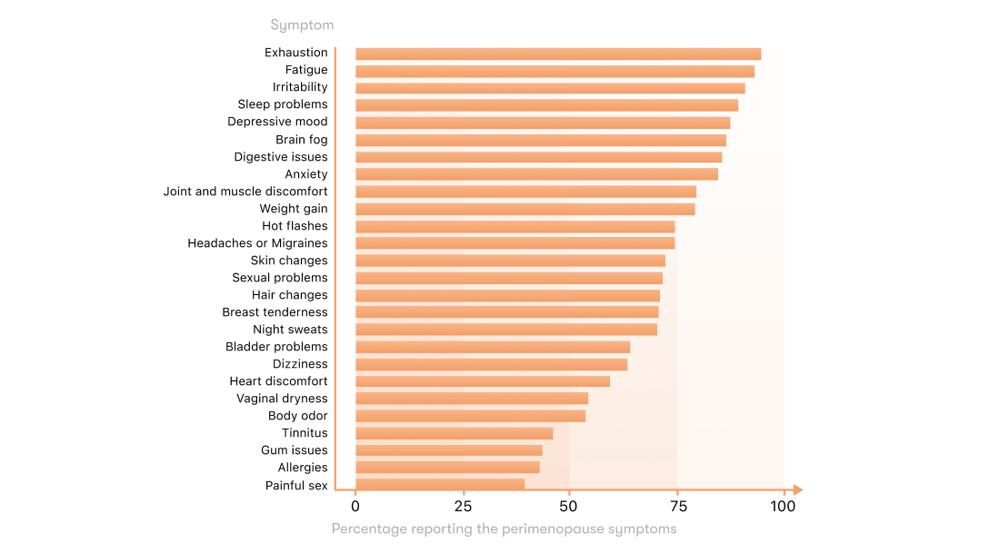
In contrast, reported symptoms experience among app members aged 35 or over who self-reported being in perimenopause showed a different pattern. Hot flashes, while widely recognized, were not among the most frequently reported symptoms in this perimenopausal group.
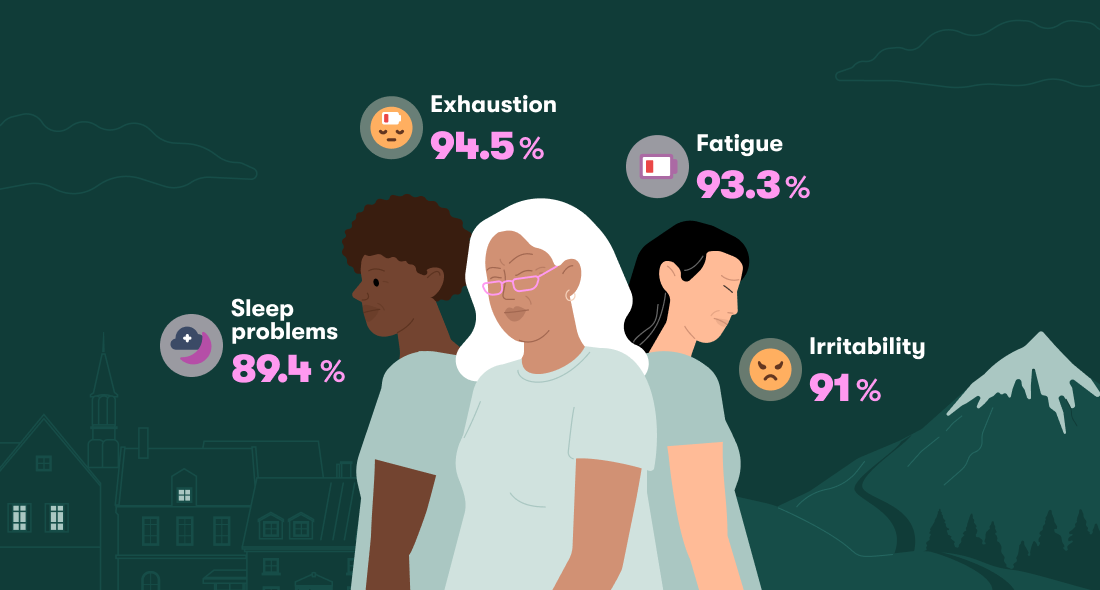
In this group, the most commonly reported symptoms were physical and mental exhaustion (95%), fatigue (93%), and irritability (91%). Symptom prevalence was higher than among women of the same age who did not report being in perimenopause.
“There is a mismatch in knowledge and expectations of perimenopause and actual symptoms experienced during perimenopause,” Dr. Mary Hedges, lead study author and an assistant professor of medicine at Mayo Clinic, Jacksonville, Florida, commented on the findings.
“Many women in perimenopause may not yet be experiencing hot flashes and are more likely to be experiencing the cognitive and physical symptoms of fatigue, exhaustion, mood, sleep, or even digestive changes,” Dr. Hedges continued.
### Does perimenopause look different around the world?
Because symptoms can be shaped by cultural norms, societal attitudes, and lifestyle, the team examined whether perimenopause differed by region. They identified significant international variation in both knowledge and reported symptom experience.
Knowledge about possible symptoms was generally higher in high-income countries. Study participants in the United Kingdom, Ireland, and Australia demonstrated the highest average knowledge scores, while lower levels of symptom recognition were observed in lower-income countries such as Nigeria and Venezuela.
Notably, overall knowledge of perimenopause symptoms was low across all regions.
While fatigue and physical and mental exhaustion were the most commonly reported symptoms globally among all study participants aged 35 or older, symptom patterns varied by location.
Digestive issues were among the top three reported symptoms in several countries, including France, Nigeria, and parts of Latin American countries such as Argentina and Mexico. Anxiety was a top-three symptom in India, while depressive mood was more frequently reported in Germany and Spain.
“The findings from this study illustrate the need to advance perimenopause research and education so that we can equip both patients and health care clinicians with the knowledge and skills needed to address symptoms and improve the quality of care we provide to women,” Dr. Hedges explained.
### Why this research matters
The gap between symptom recognition and symptom experience has implications for our clinical understanding of perimenopause and for patient–clinician communication.
[Previous research](https://med.flo.health/articles/when-do-perimenopause-symptoms-start) using real-world data has shown that although significant numbers of women in their 30s and 40s report symptoms that are commonly associated with perimenopause, relatively few seek care from a health care professional.
“We need to normalize conversations around perimenopause and menopause so women feel empowered to have honest conversations with their doctors and other support systems,” said Anna Klepchukova, chief medical officer at Flo.
“This study demonstrates a prolonged commitment from both Flo Health and Mayo Clinic in helping women better understand their bodies and advocating for their health through perimenopause, and every other phase of their health journeys, through medically backed insights and advice,” Klepchukova concluded.
Reviewed by [Yella Hewings-Martin, PhD](https://flo.health/about-us/yella-hewings-martin), senior research scientist and medical writer, Flo Health, UK
### Supporting perimenopause care beyond the study
Alongside its research program, Flo Health develops digital tools designed to support women and people who’ve had periods in understanding and tracking perimenopause-related symptoms.
Flo for Perimenopause includes a personalized symptom assessment that allows members to log and monitor symptoms such as hot flashes, mood changes, fatigue, and sleep disturbance over time. In addition, members can monitor cycle irregularity longitudinally. Based on user-reported data, the tool provides a summary view of symptom burden intended to help members recognize patterns and changes during the perimenopausal transition.
Flo for Perimenopause is informed by clinical guidance and developed with input from scientists and medical experts. It is not intended for diagnosis or clinical decision-making, but to support symptom awareness and preparation for clinical discussions.
Flo also provides free, evidence-based patient education resources that health care professionals can share with patients to support engagement between visits. These resources are designed to help patients better understand perimenopause and prepare for clinical conversations about their symptoms.
When patients access these resources, they are able to use Flo’s core features at no cost. In addition, patients receive an optional three-month trial of Flo Premium, which provides access to additional educational and tracking features. Patients may cancel the trial at any time and continue using the free version of the app.
Health care professionals can learn more about these patient resources by visiting: [https://med.flo.health/co-care-pack](https://med.flo.health/co-care-pack)
### Further reading
Health care professionals interested in exploring related research and perspectives on perimenopause may find the following articles helpful:
- [How digital health tools could support perimenopause care](https://med.flo.health/articles/how-digital-health-tools-could-revolutionize-perimenopause-care)
- [When do perimenopause symptoms start?](https://med.flo.health/articles/when-do-perimenopause-symptoms-start)
- [The emotional and physical impact of perimenopause](https://med.flo.health/articles/emotional-physical-impact-perimenopause-insights-ob-gyns)

##### Stay up to date
You’re busy, we get it. Sign up to get the latest research and evidence in women’s health, plus practical tools and resources to help you save time and support your patients.
###### Product
- [Tracking cycle](https://flo.health/product-tour/tracking-cycle)
- [Getting pregnant](https://flo.health/product-tour/getting-pregnant)
- [Pregnancy](https://flo.health/product-tour/pregnancy)
- [Help Centre](https://help.flo.health/hc/en-us)
- [Privacy Portal](https://flo.health/privacy-portal)
###### Company
- [About us](https://flo.health/about-flo)
- [Medical affairs](https://flo.health/medical-expertise)
- [Science & Research](https://flo.health/science-and-research)
- [Careers](https://flo.health/careers)
- [Contact](https://flo.health/contact-us)
- [Press Center](https://flo.health/press-center)
###### Privacy
- [Privacy policy](https://flo.health/privacy-policy)
- [Terms of use](https://flo.health/terms-of-service)
- [Cookie policy](https://flo.health/cookie-policy)
- [Trademark Usage](https://flo.health/trademark-usage-guidelines)
- Your Privacy Choices
###### SOCIAL MEDIA
- [Instagram](https://www.instagram.com/flotracker/)
- [Facebook](https://www.facebook.com/flotracker/)
- [TikTok](https://www.tiktok.com/@flotracker?lang=en)
- [Linkedin](https://www.linkedin.com/company/flo-by-flohealth-inc/)
###### Flo App
The #1 period and ovulation tracker worldwide
© 2026 Flo Health Inc., Flo Health UK Limited
```json
{
"@context" : "https://schema.org",
"@type" : "BlogPosting",
"author" : {
"@type" : "Person",
"name" : "Flo Health",
"url" : "https://med.flo.health/articles/author/flo-health"
},
"dateModified" : "2026-02-19T17:24:37.675Z",
"datePublished" : "2026-02-18T12:54:27.000Z",
"headline" : "New Flo study reveals the global reality of perimenopause",
"image" : [ "https://med.flo.health/hubfs/perimenopause%20paper%20hero%20image-1.png" ],
"mainEntityOfPage" : {
"@id" : "https://med.flo.health/articles/new-flo-study-reveals-the-global-reality-of-perimenopause-1",
"@type" : "WebPage"
},
"publisher" : {
"@type" : "Organization",
"logo" : {
"@type" : "ImageObject",
"url" : "https://med.flo.health/hubfs/Flo-Logo.png"
}
}
}
```